A pharma company in Kala Amb runs 12-hour shifts. Quality is solid. Products move. But their website has not been updated since 2021. Their Google Business Profile has zero reviews. And their sales team still chases leads through WhatsApp manually.
Sound familiar?
This is the invisible problem in Indian healthcare today. Good operations. Weak digital presence. And a slow leak of opportunities to competitors who figured out the system first.
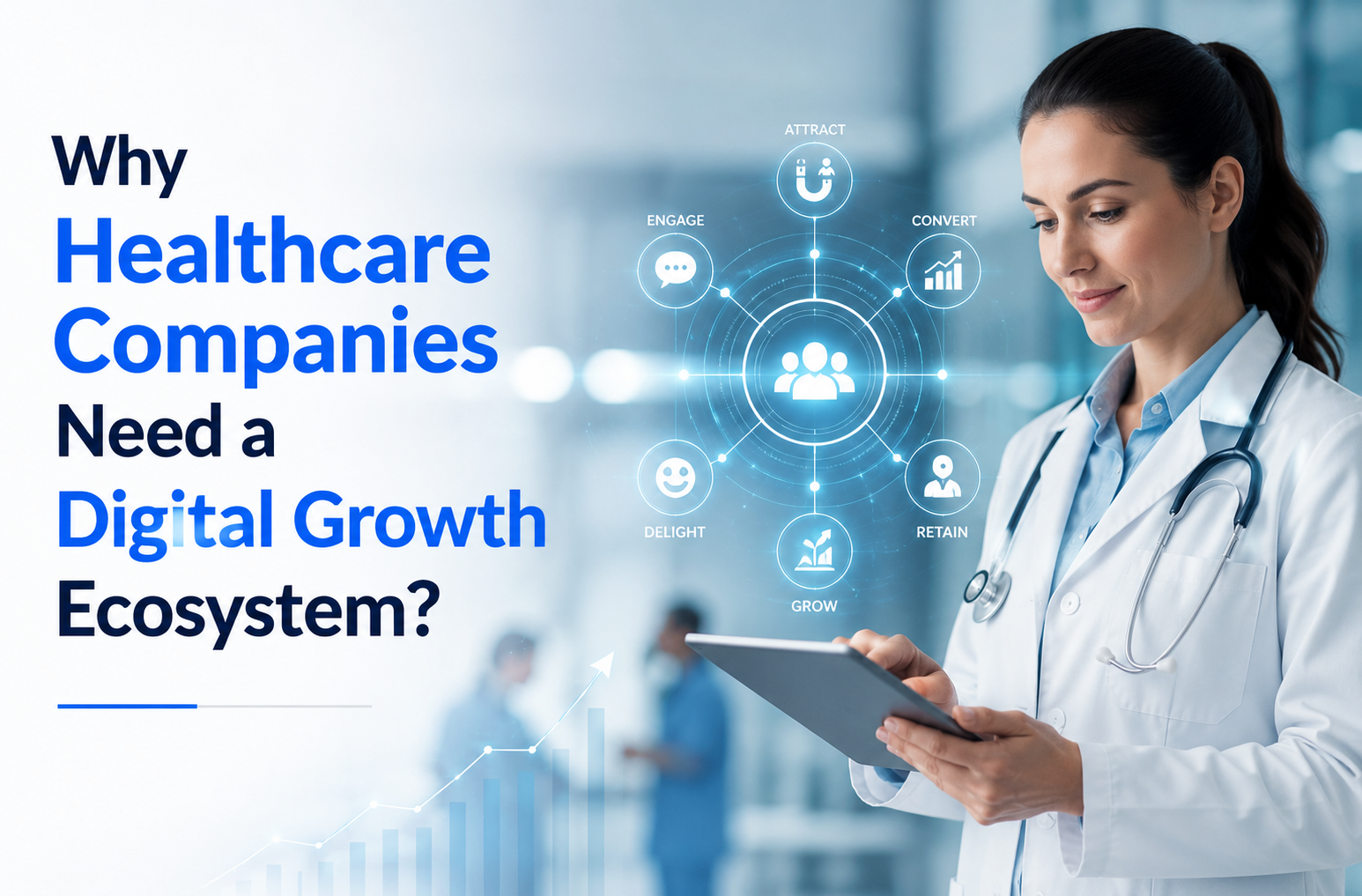
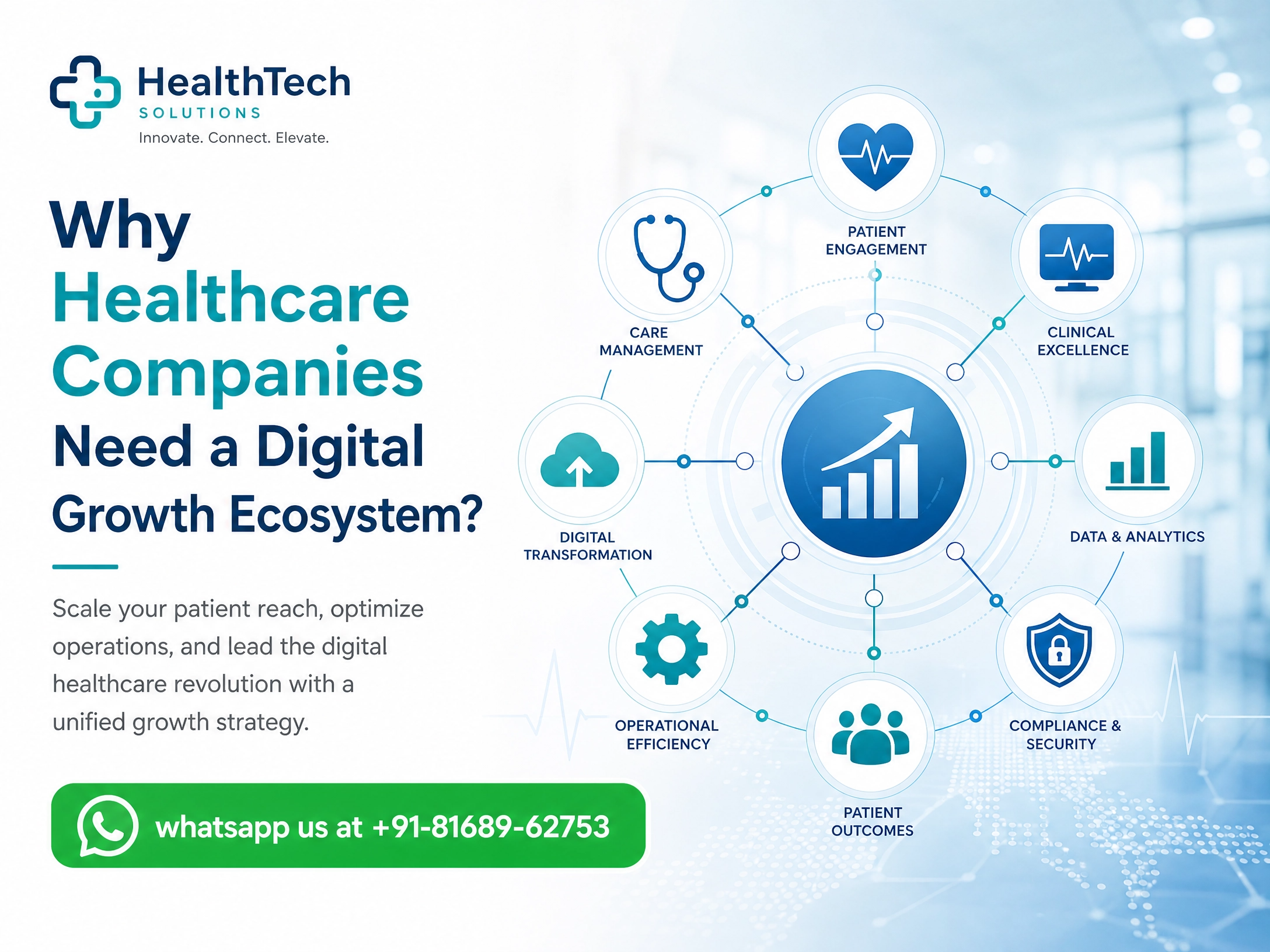
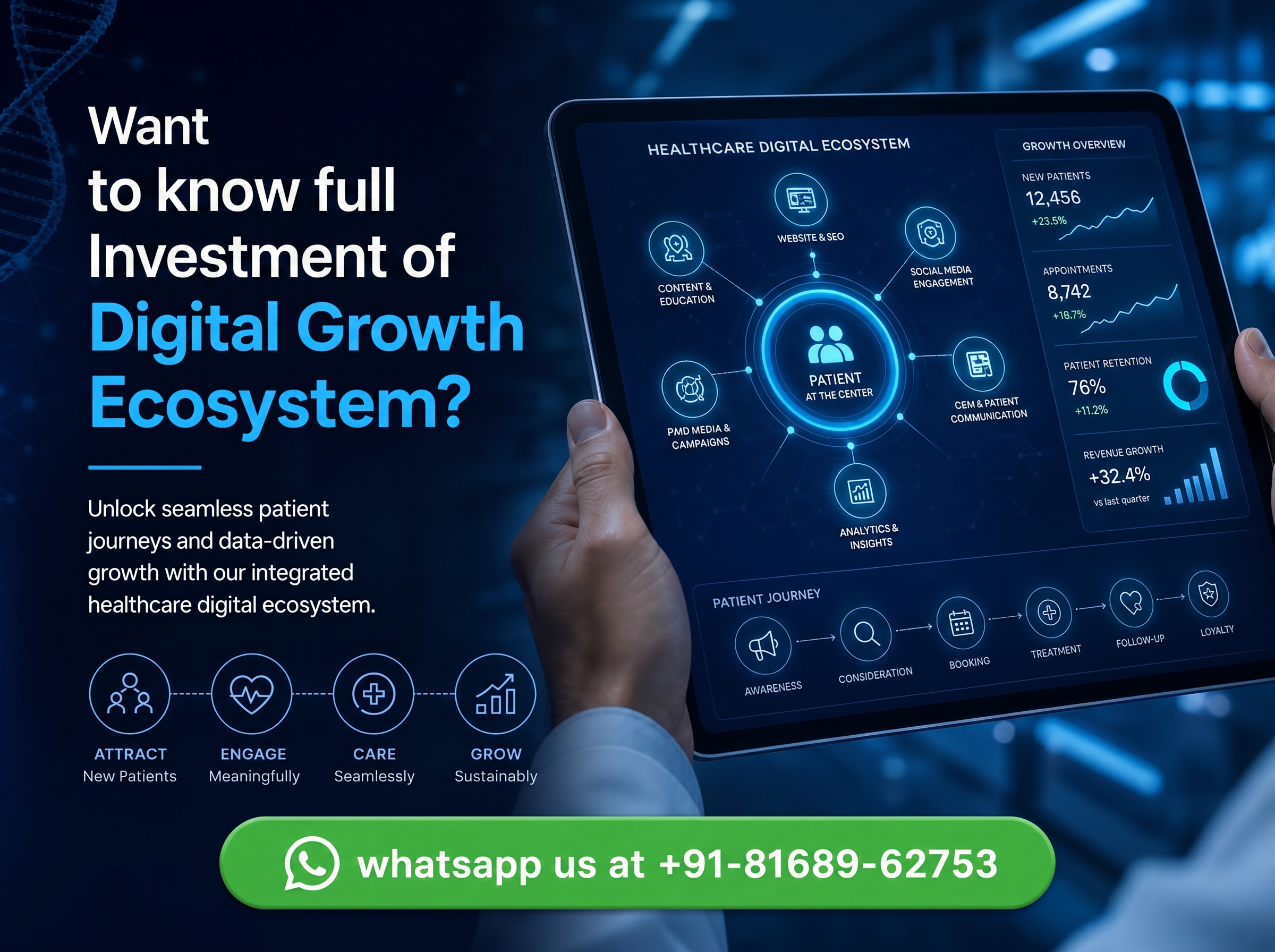
The solution is not another ad campaign. It is not a new website. It is a digital growth ecosystem for healthcare companies — a connected system where SEO, content, automation, and reputation work together as one engine. Not as scattered tools. As one engine.
This post explains what that ecosystem looks like, why healthcare businesses need it urgently, and how three real businesses changed their trajectory by building it.
The Healthcare Buyer Has Changed. The Marketing Has Not.
Here is a number worth pausing on.
According to the WHO Global Strategy on Digital Health, over 80% of health information searches now begin online. That includes patients, procurement managers, hospital administrators, and pharma distributors.
They research before they call, compare before they visit & trust Google reviews before they trust a referral.
Meanwhile, most Indian healthcare companies are marketing like it is 2014. A static website. An occasional Facebook post. A WhatsApp broadcast group. That is not a system. That is a list of activities with no connective tissue.
The businesses that are winning right now have something different. They have a healthcare-specific digital ecosystem that works even when the team is not actively marketing.
What Is a Digital Growth Ecosystem?
A digital ecosystem is not a collection of tools. It is a connected system where every element feeds the next.
Think of it this way. Your website attracts visitors. SEO makes sure the right people find it. Content builds trust before the first call. Automation captures the lead and follows up without anyone on your team lifting a finger. Reputation management makes sure the review profile convinces the buyer to choose you.
Each piece supports the next. Remove one and the whole system loses power.
This is the contrast most healthcare companies are living in right now:
| What you have now | What a digital ecosystem gives you |
|---|---|
| A website that ranks for nothing | A site optimised for the exact terms buyers search |
| Leads that come in and go cold | Automated follow-up within 5 minutes, every time |
| No content, no credibility | Educational content that builds trust before first contact |
| Word-of-mouth as the only channel | SEO, social, email, and local search working together |
| Zero visibility on Google Maps | 4.5-star profile that converts local searches into calls |
| No idea what is working | Monthly reports showing traffic, leads, and conversions |
This is not a small upgrade. It is a fundamentally different way of operating online.
Case Study 1: The Kala Amb Pharma Manufacturer Who 3X’d Distributor Inquiries
A mid-size pharmaceutical manufacturing unit in Kala Amb, Himachal Pradesh. About 60 employees. Products include contract-manufactured formulations for brands across North India.
Before the ecosystem was built, here is what their digital presence looked like:
- Website last updated in 2022. Not mobile-friendly.
- No Google Business Profile.
- No CRM. Leads tracked in a WhatsApp group.
- Zero blog content. No inbound traffic.
Every new distributor came through referrals. That is fine until it is not. When a referral dried up, so did the pipeline.
After building the ecosystem — new website, local SEO, content targeting pharma buyers, automated lead response via email — the results over six months:
- Distributor inquiries tripled compared to the same period the previous year.
- Average response time to new leads dropped from 18 hours to under 8 minutes.
- Google Business Profile reached a 4.3-star rating. Started showing in local pack for relevant searches.
The team did not hire anyone new. The system did the follow-up work for them.
Case Study 2: The Multi-Specialty Clinic That Stopped Depending on Walk-ins
A multi-specialty clinic in a Tier 2 city. Two doctors, four specialties, a modest reception team. They relied almost entirely on walk-ins and existing patient referrals.
The problem was predictable. Walk-in numbers varied wildly month to month. They had no way to attract patients proactively. No online booking. No review strategy. The clinic’s Google listing had 11 reviews and a 3.7-star rating.
The ecosystem built for them included:
- Local SEO targeting condition-specific searches in their city.
- Google Business Profile rebuild with proper categories, photos, and weekly posts.
- A structured review-ask system is sent via WhatsApp after every appointment.
- A simple content plan covering the top 10 questions patients search for before their first visit.
Within 90 days, the clinic’s review count went from 11 to 74. Rating moved from 3.7 to 4.6. They started showing up in the local map pack for six high-intent queries. New patient appointment volume increased by 40% without spending a rupee on ads.
That is what a proper digital marketing system for healthcare companies does. It does not just improve visibility. It changes the entire growth trajectory.
Case Study 3: The MedTech Startup That Built Credibility Before the First Sales Call
A healthtech startup in Gurugram. Remote monitoring devices for post-operative patients. B2B model selling to hospitals and private nursing homes.
Their challenge was trust. Hospital purchase committees do not buy from companies they cannot find online. A startup with a thin digital presence feels risky to procurement teams who need to justify vendor selection.
The ecosystem built:
- A content strategy targeting terms that hospital administrators and CMOs actually search.
- Case study pages showing use cases with clear outcome data.
- LinkedIn presence publishing thought leadership content twice a week.
- An automated lead nurture sequence that followed up with hospitals who downloaded their product brochure.
Within four months, their sales cycle shortened by three weeks. Because by the time the sales team got on a call, the buyer had already read three articles, seen the case studies, and watched a product explainer video. The ecosystem had done the trust-building before the conversation even started.
This is the compounding power that single-tool marketing cannot replicate.
The 6 Pillars Every Healthcare Ecosystem Must Have
Not every business needs every tool. But every healthcare company needs these six pillars. Without all six, there is a gap where leads, trust, or visibility will consistently leak out.
| Ecosystem Pillar | What it does | What happens without it |
|---|---|---|
| SEO Foundation | Brings buyers to your site before they know you | Zero inbound. 100% dependent on outreach |
| Content Strategy | Builds trust and educates buyers before the first call | Long sales cycles. Buyers choose competitors with more info |
| Lead Capture System | Turns website visitors into actionable inquiries | Traffic arrives, bounces, and disappears forever |
| Marketing Automation | Follows up with leads at the right time, automatically | Leads go cold. Revenue leaks silently every week |
| Reputation Management | Builds the social proof that converts the hesitant buyer | Buyers choose the competitor with more reviews. Always. |
| Analytics and Reporting | Shows what is working and what needs to change | Decisions based on gut feeling. Budget wasted on wrong channels |
Each pillar on its own helps a little. All six connected is where the compounding starts.
Why Healthcare Is Different From Every Other Industry
Healthcare marketing has a layer of complexity that most industries do not.
The buyer is cautious. They are making decisions that affect health, procurement budgets, or compliance. A generic digital marketing approach feels out of place. It destroys trust faster than no marketing at all.
McKinsey’s research on healthcare value creation shows that digital-first healthcare companies are seeing 2 to 3 times higher patient acquisition rates compared to those relying on traditional outreach alone.
That gap is not about budget. It is about system design.
Healthcare-specific ecosystems need to account for:
- Trust-first content. Buyers need to feel confident before they click contact.
- Compliance-aware messaging. No claims that cannot be substantiated. No language that creates liability.
- Long consideration cycles. A hospital does not buy a product on day one. Nurture sequences need to be longer and more patient.
- Multiple decision-makers. The doctor recommends. The admin approves. The purchase team orders. Your content needs to speak to all three.
This is why a one-size-fits-all agency approach fails healthcare businesses. The ecosystem has to be designed for how healthcare buyers actually think.
The Cost of Waiting
Most healthcare businesses know they need to fix their digital presence. The delay is almost always one of two things. Either they do not know where to start, or they assume they will get to it later.
Here is the problem with later.
SEO takes time to compound. A competitor who starts building their content and authority today will have a six-month head start on you in six months. That gap does not close quickly. It widens.
Every month without a lead capture system is a month of traffic arriving and leaving with no record. Every month without automation is a month of leads going cold because no one followed up fast enough.
The healthcare companies that will dominate local and regional search in 2027 are the ones building their ecosystems in 2026. Not 2027.
Where to Start if Your Digital Presence Is Weak
You do not need to build everything at once. Start with what causes the most visible damage right now.
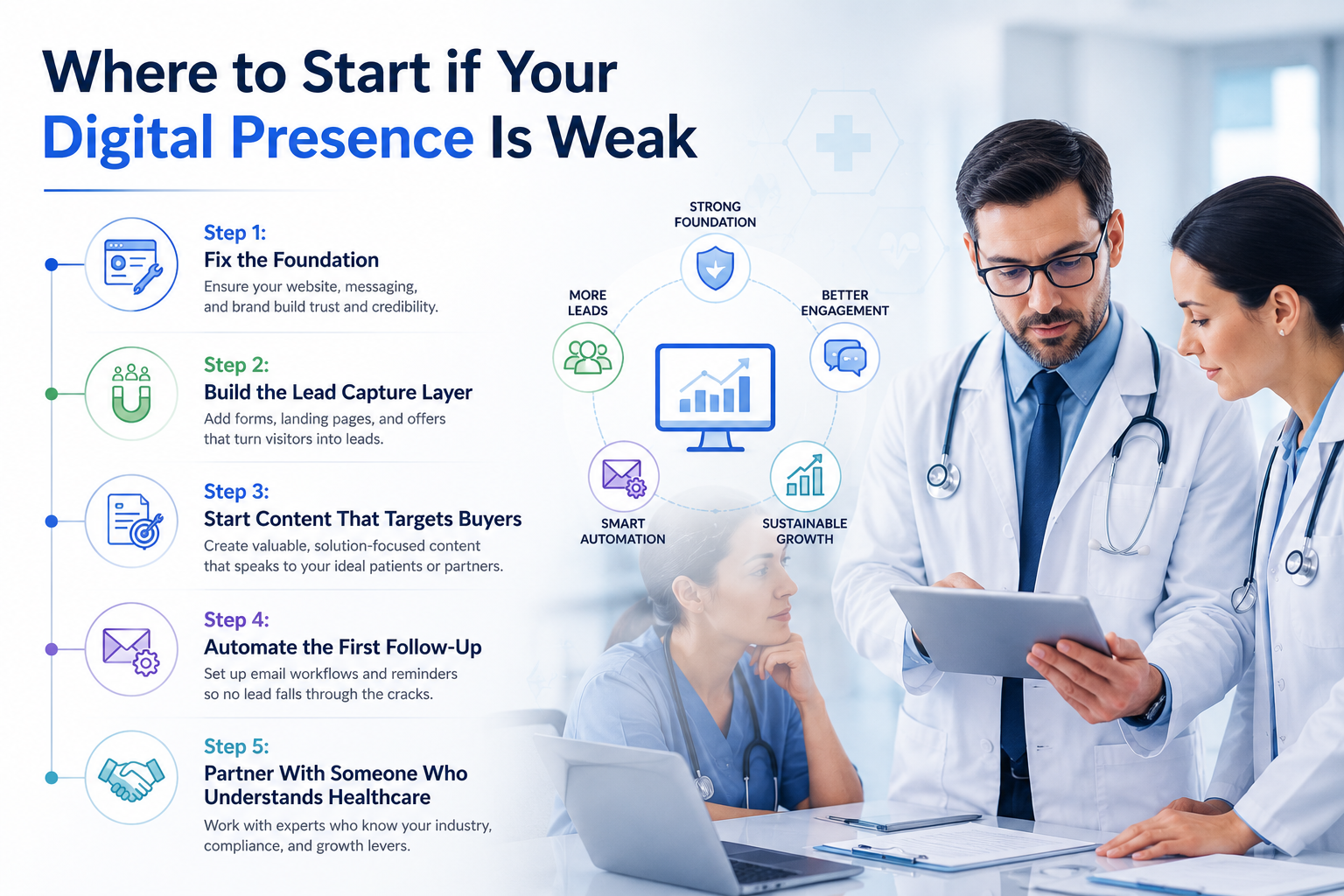
Step 1: Fix the Foundation
If your website is not mobile-friendly or loads slowly, nothing else will work well. Fix this first. Then set up or clean up your Google Business Profile.
Step 2: Build the Lead Capture Layer
Add a clear call-to-action on every page. Make it easy for visitors to reach you. Connect your forms to a basic CRM. Even a free tool like Zoho works at this stage.
Step 3: Start Content That Targets Buyers
Pick three questions your buyers actually ask before they call you. Write an honest, useful answer to each one. Publish them. This is your SEO foundation starting.
Step 4: Automate the First Follow-Up
When someone submits an inquiry, they should get a response within minutes. Automate that first acknowledgment. It does not need to be complex. It needs to be fast.
Step 5: Partner With Someone Who Understands Healthcare
Generalist agencies will give you a generalist system. Healthcare businesses need someone who understands compliance, buyer psychology, and the specific trust signals that convert a hospital procurement team.
That is exactly the kind of digital growth system GrowNerds builds for healthcare and pharma companies across India. Strategy-first. Healthcare-specific. Built to compound month on month.
The Bottom Line
Healthcare companies do not fail online because they lack knowledge or capability. They fail because they never built a system.
A website alone is not a system. Running ads alone is not a system. Posting on Facebook twice a week is not a system.
A digital growth ecosystem for healthcare companies is a connected structure where visibility, trust, lead capture, and nurture work together. It grows while you sleep, follows up while your team is in surgery or on the manufacturing floor, compounds while your competitors are still debating whether to start.
The companies winning right now built this system a year ago. The companies that will win next year are building it today.
If you are unsure where your ecosystem has gaps, start with a free audit. It takes 15 minutes and shows you exactly where you are losing visibility and leads.
Frequently Asked Questions
What is a digital growth ecosystem for healthcare companies?
A digital growth ecosystem is a connected system where your website, SEO, content, lead capture, marketing automation, and reputation management all work together. Instead of running separate marketing activities with no link between them, every element supports the next. The result is consistent visibility, better quality leads, and a shorter sales cycle for hospitals, clinics, pharma companies, and medtech businesses.
Why do healthcare companies need digital marketing in 2026?
Because healthcare buyers have moved online. Patients research symptoms and clinics on Google before booking. Hospital procurement teams check vendor websites and reviews before shortlisting. Pharma distributors compare companies online before making contact. If your digital presence is weak, you are invisible to these buyers at the exact moment they are ready to act.
How long does it take to see results from a healthcare digital ecosystem?
Most businesses see early results within 60 to 90 days. These include improved Google Business Profile performance, faster lead response times, and initial content ranking. Compounding organic results through SEO typically build strongly from month four onward. The ecosystem continues to improve month on month as content, authority, and automation mature.
What is the difference between digital marketing and a digital ecosystem?
Digital marketing is running campaigns and activities. A digital ecosystem is a connected infrastructure. Marketing is a campaign. An ecosystem is a system. Campaigns stop producing results when you stop running them. An ecosystem compounds. The content ranks months after it is published. The automation follows up leads you forgot existed. That is the fundamental difference.
Can a small clinic or single-doctor practice benefit from a digital ecosystem?
Yes. The scale is different but the principles are the same. A single-doctor practice with strong local SEO, a well-managed Google profile, and a simple lead capture system will consistently outperform larger clinics with no digital infrastructure. Start small. Build systematically. The ecosystem does not need to be expensive to be effective.
How does GrowNerds help healthcare companies build this ecosystem?
GrowNerds designs and builds complete digital ecosystems specifically for healthcare and pharma businesses. This includes website development, SEO strategy, content planning, marketing automation setup, Google Business Profile management, and monthly reporting. Every system is built around the specific buyer journey of the healthcare company. Not a template. A custom growth system designed to compound.
A digital strategist building scalable ecosystems for many kinds of businesses. Focused on turning online presence into structured, revenue-driven growth systems. As a researcher, Nishant has done a lot of experiments, and through learning from them, he now founded GrowNerds so that he could provide a scalable digital ecosystem to every type of business.
Leave a Reply